
As the U.S. government approaches a critical funding deadline, the insurance industry may be among the many sectors impacted if lawmakers fail to agree on a new budget. If Congress cannot reach a resolution by midnight, a government shutdown will take effect—bringing a wave of economic uncertainty that could significantly influence insurers, according to credit rating agency AM Best.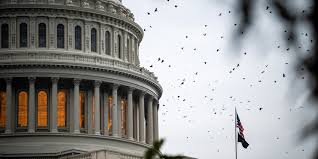
In a recent statement, Ann Modica, Director of Credit Rating Criteria at AM Best, emphasized that this looming fiscal standoff arrives at a time when the broader U.S. economy is already showing signs of strain.
“The potential government shutdown coincides with increasing evidence of a slowing U.S. economy,” said Modica.
“Annual real GDP growth is projected to decline further in 2025, inflation remains stubbornly above the Federal Reserve’s 2.0% target, and the labor market is beginning to show signs of weakening.”
Modica also noted that although tensions around global trade have eased slightly in recent months, ongoing uncertainty continues to weigh heavily on corporate sentiment, potentially holding back future investment and hiring.
Insurers Face Potential Ripple Effects
AM Best cautioned that the extent to which insurers will be affected depends heavily on the duration of the shutdown. While previous shutdowns have generally been brief, the possibility of a more prolonged government freeze could present both direct and indirect challenges to the insurance industry.
The last major shutdown, which began in December 2018, stretched over 34 days, making it the longest in modern U.S. history. Even that relatively short disruption had widespread consequences, including delayed government services and an overall dip in economic activity.
In a longer shutdown, insurers could feel pressure as consumer confidence weakens, business investment stalls, and financial markets react negatively to political instability. With federal spending halted or significantly reduced during such a period, sectors tied to government contracts or regulatory services may experience operational delays or financial strain.
AM Best emphasized that, beyond the short-term effects, the longer-term implications for the U.S. economy could be more damaging, particularly in terms of global investor confidence and credit ratings.
“The most persistent effect on the U.S. economy is likely to be a loss of trust in the functionality of American political institutions,” AM Best said in its commentary.
“This erosion of confidence could place downward pressure on the nation’s sovereign credit ratings and deepen the sense of uncertainty around U.S. fiscal and economic policy.”
Flood Insurance Program Also at Risk
In addition to broader economic concerns, the insurance sector may face a more immediate issue. The National Flood Insurance Program (NFIP), which is managed by the Federal Emergency Management Agency (FEMA), is set to expire on September 30—the same day government funding runs out.
Unless Congress reauthorizes the NFIP, FEMA will be forced to halt the issuance of new flood insurance policies, which could leave homeowners and real estate markets in flood-prone areas in a difficult position.
A Climate of Uncertainty
The overarching message from AM Best is clear: the insurance industry, while resilient, is not immune to the cascading effects of political dysfunction. As the economy slows and uncertainty grows, both consumers and businesses may pull back on spending and delay long-term decisions, ultimately affecting the demand for insurance products and services.
With heightened political polarization continuing to complicate effective governance, the agency warns that even the perception of dysfunction can carry serious consequences for markets, credit ratings, and economic stability.
For now, the focus remains on Capitol Hill. The decisions made—or not made—in the hours ahead will determine whether a shutdown begins and how deeply its effects might ripple through the U.S. economy and its financial institutions.