

The opening quarter of 2025 presented a mixed landscape for the property insurance industry, marked by fewer overall claims but significantly higher costs per claim — a trend driven largely by catastrophic wildfires in California, according to Verisk’s latest data.
In its “Quarterly Property Report January–March 2025,” Verisk Analytics revealed that the total number of property insurance claims filed during the first three months of the year fell to the lowest quarterly level observed in the past five years. This drop continued a downward trajectory in claims frequency that began in 2023. However, this positive trend in volume was overshadowed by a dramatic spike in claims severity, particularly in states impacted by severe natural disasters.
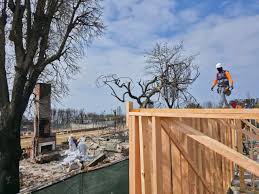
Wildfires Drive Severity Surge in California
While numerous weather-related events impacted the U.S., it was the devastating wildfires in California — namely the Palisades and Eaton fires — that most significantly impacted claims severity and overall loss costs. Together, these two major fires generated an estimated 48,000 claims, resulting in a staggering $10 billion in total insured losses.
Verisk reported that the average claim estimate for wildfire-related losses in California reached approximately $337,000, a figure that dwarfs typical property loss values. This contributed to a 1,805% year-over-year increase in the replacement cost value (RCV) for California alone when compared to Q1 2024.
Nationwide, the average RCV jumped by 46% compared to the same quarter in the previous year, reflecting the extreme cost of rebuilding and repairing properties, especially in fire-prone regions. This significant uptick in loss costs was a key highlight of the quarter, despite the drop in claim frequency.
Lower Severity in Most States Balances National Trends
While California skewed the national numbers with record-breaking fire losses, the majority of U.S. states actually reported declines in severity. According to Verisk’s data, 33 states experienced reduced average loss costs compared to Q1 2024.
States such as Maine, Delaware, Montana, and Oregon posted particularly steep declines in severity, ranging from 80% to 95%, which helped moderate the national severity average. These reductions were largely attributed to milder weather conditions and fewer catastrophic events in those areas.
Total Claim Volume Down — But CAT Claims Hold Steady
Despite widespread natural disasters, overall claim volume declined by approximately 7% in Q1 2025 compared to the same period in 2024. The drop was largely attributed to a reduction in non-catastrophe (non-CAT) claims, even as catastrophe-related (CAT) claims remained relatively stable.
Among individual states, Texas led the nation in terms of total claims filed, reporting around 161,000 claims. Following Texas were California with 96,600 claims, Florida (48,500), Missouri (48,200), North Carolina (36,000), and Pennsylvania (35,700).
Texas not only topped the chart in total volume but also accounted for a substantial share — 95% of all Q1 CAT events — largely fueled by severe wind and hail storms.
Tornado Alley Sees CAT Claims Surge
Several states in Tornado Alley and beyond experienced sharp increases in catastrophe-related claims during the first quarter, driven largely by tornadoes, hailstorms, and damaging winds. Notable spikes in CAT claims were observed in:
-
Kentucky and Nebraska: Both states saw CAT claim increases exceeding 200%
-
Oklahoma: Reported a 45% increase in catastrophe claims
These increases were tied to a rise in violent spring storms and tornado outbreaks that swept across the central U.S. during early 2025.
Pacific Northwest Sees Claims Drop
In contrast, many states in the Pacific Northwest experienced a substantial decrease in weather-related claims. Milder winter conditions contributed to sharp reductions in common seasonal hazards. Verisk’s report showed:
-
Washington: 99% drop in freeze-related claims
-
Oregon: 98% decrease in ice and snow claims
-
Maine: 98% decline in wind-related claims
These dramatic reductions were attributed to an unusually warm and calm winter season across much of the northern tier of the country.
Labor Cost Increases Slow Down
In addition to trends in claim frequency and severity, Verisk’s report noted a moderation in billable labor cost growth across the U.S. for Q1 2025. Labor costs rose by 1.06%, down from 1.42% growth reported in the prior quarter (Q4 2024).
This slowdown in labor inflation may offer temporary relief to insurers and policyholders contending with high replacement costs, though it remains uncertain how long this trend will persist.
Trade and Immigration Policies Pose Risks to Construction Costs
The report also cautioned that ongoing U.S. immigration and trade policies could introduce volatility to the construction and rebuilding sectors.
-
Around 28% of U.S. lumber, 24% of concrete, and 36% of gypsum used in construction are imported.
-
Additionally, 26% of the construction workforce is composed of immigrant labor.
Given this reliance on global supply chains and foreign labor, changes in tariffs or immigration enforcement could significantly impact the cost and pace of reconstruction following major disasters.
Key Takeaways
-
Claim Volume: Fell to a five-year low, primarily due to fewer non-CAT claims
-
Claim Severity: Surged, especially in California due to wildfire losses
-
California Wildfires: Drove a 1,805% increase in RCV; average wildfire claim hit $337,000
-
Texas: Led U.S. in both total and catastrophe claims
-
Tornado Activity: Boosted CAT claims significantly in Oklahoma, Kentucky, and Nebraska
-
Labor Costs: Growth slowed to 1.06%
-
Construction Risks: Future costs could be impacted by trade and immigration policies
Conclusion
While 2025 started with relatively low overall claim counts, the rising cost of individual claims — especially from high-severity CAT events like wildfires — continues to pose challenges for the insurance and construction sectors. As climate patterns shift and rebuilding expenses climb, insurers may need to adjust risk models and pricing strategies accordingly.
Verisk’s Q1 2025 data highlights a complex environment where fewer claims do not necessarily equate to reduced costs — particularly as regional catastrophes grow more destructive and expensive to recover from.